
JEAN POUS (1875 - 1973)
Jean Pous (1875–1973) grew up in La Jonquera, a Catalan town near the French border, as one of ten children in a farming family. Frequently ill as a child, he had limited formal education and attended school only briefly before entering working life.
At the age of twelve, Pous became an apprentice in a cork factory, and by his early twenties he had established his own business in Le Boulou, in the Pyrénées-Orientales, together with two of his brothers. He later married and had two children, spending most of his life working in the family factory.
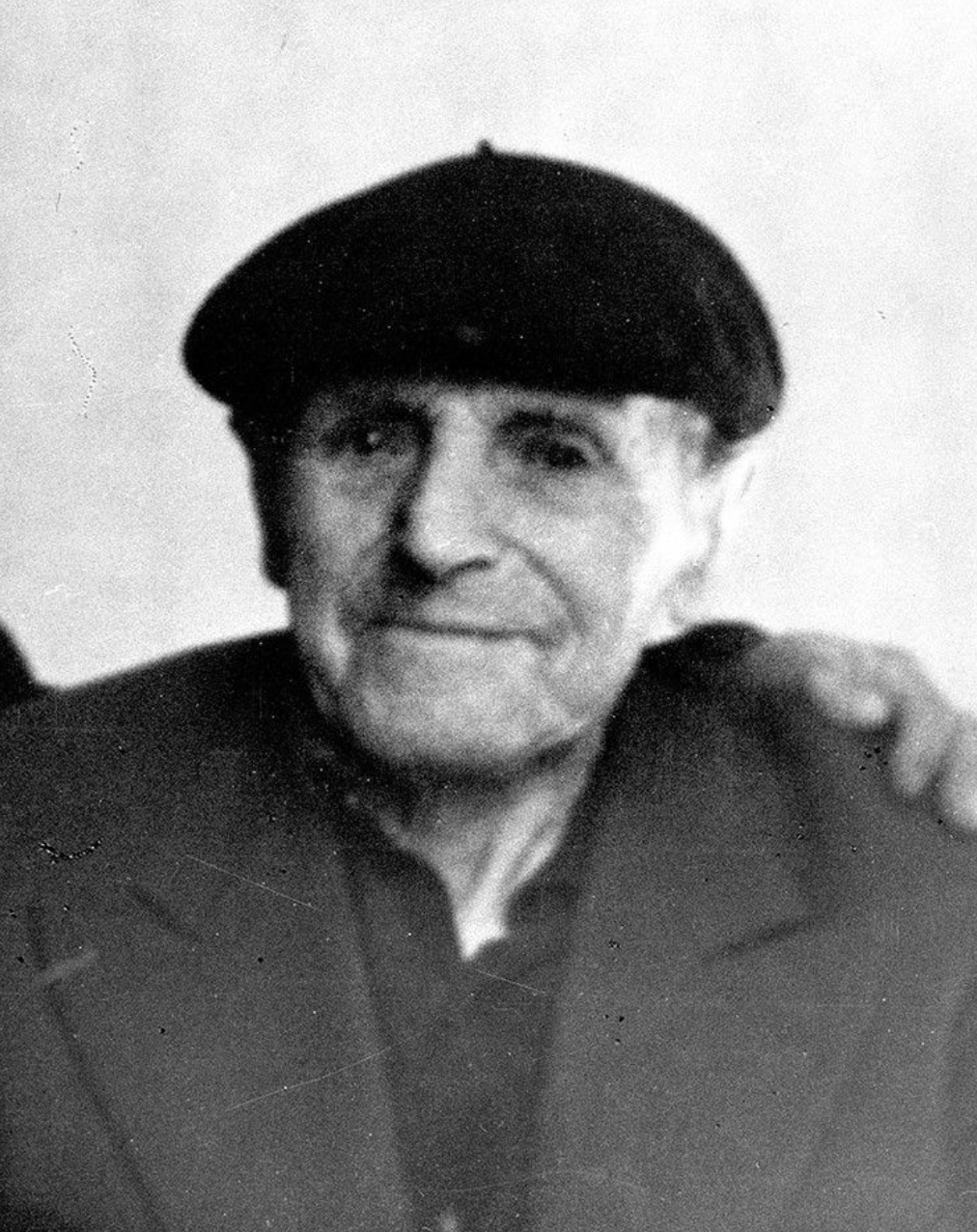
Portrait of Jean Pous. Photo by Claude Massé.
It was only after retiring, at the age of eighty-seven, that Pous discovered his vocation as an artist. In the courtyard of his home, and during long walks through the countryside he gathered stones of all kinds - flint, granite, and slate - whose natural forms inspired him.
Using simple, homemade tools, he patiently chiselled and scraped each stone, coaxing from them faces, animals (dogs, fish, and goats), as well as plants and flowers. His work belongs to the tradition of art brut sculpture, characterised by its independence from academic training and its direct, instinctive engagement with raw materials.
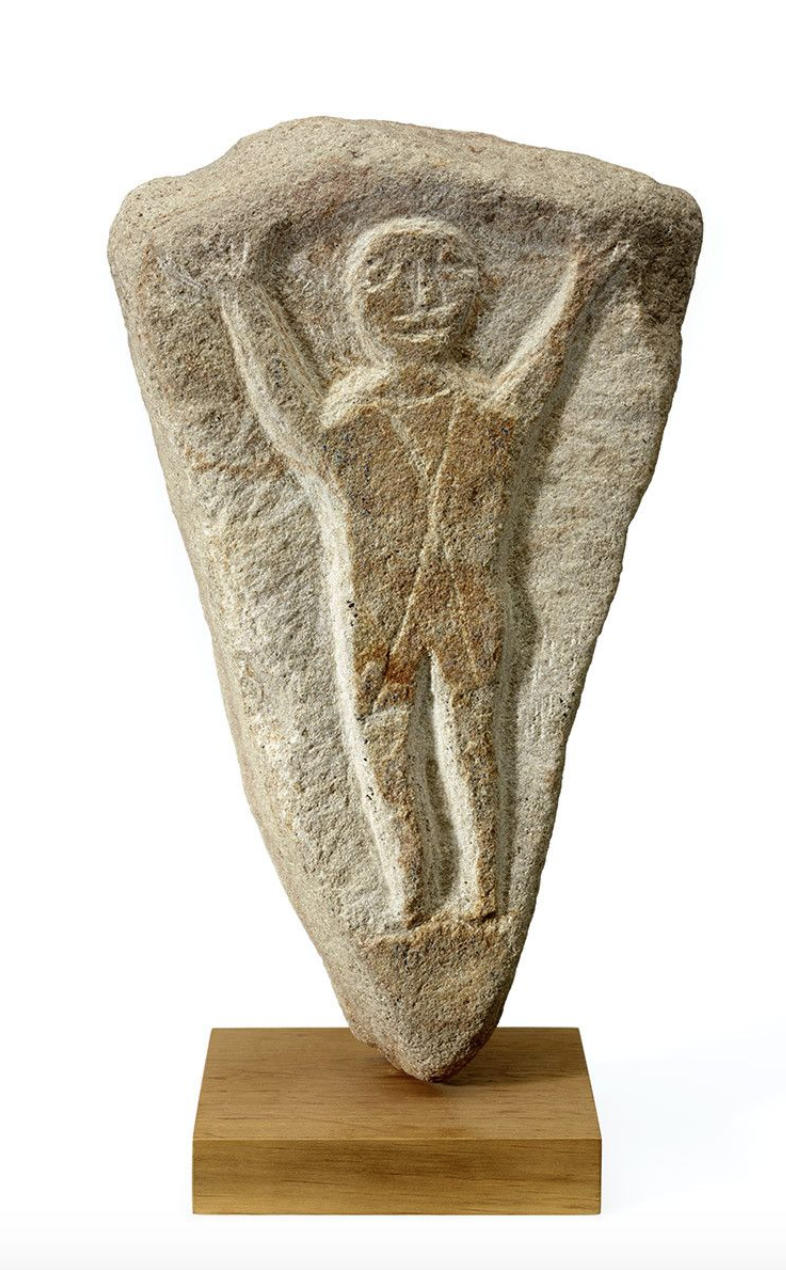
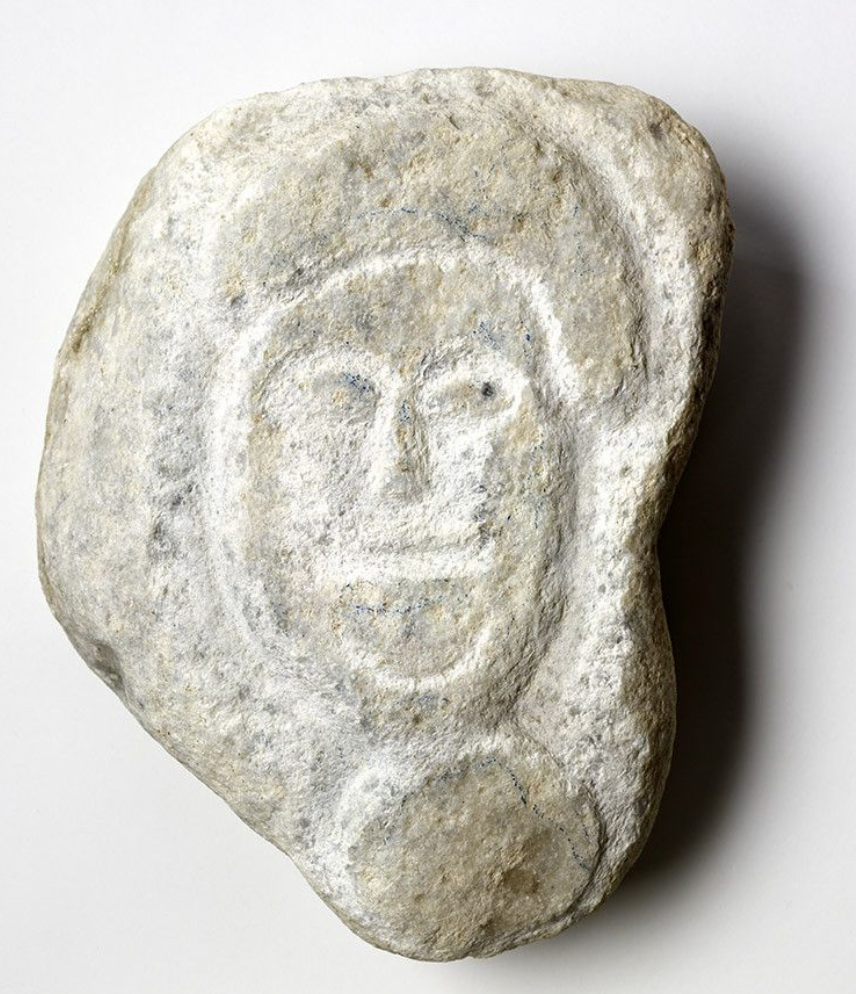
Pous worked with remarkable perseverance, producing nearly 1,500 sculptures. In 1967, at the age of ninety-two, a heart attack forced him to stop carving. Undeterred, he turned instead to drawing, creating works with ballpoint pen and coloured pencils on salvaged paper and cardboard. His late artistic output includes approximately 1,500 drawings which, like his sculptures, reflect a deeply personal visual language developed outside conventional artistic frameworks.
—————————————————————————
Information and images are drawn from the Collection de l’Art Brut, 11 Avenue des Bergières, CH-1004 Lausanne, Switzerland.

Motif of an owl in the moonlight, sculpted onto a pebble.
Though fitted with a hook for hanging, it would also make a wonderful paperweight, resting on the corner of a desk.
The work bears an undeciphered signature on the back.
3cm H x 12cm W x 8cm D.